Snapchat Redesign
A redesign of the Snapchat “discover” page.
Working Figma Prototypes: Prototype 1—Prototype 2
My Role: UX Researcher/Designer
Collaborators: Lucy Xu, William Wong, Jan Eric De Castro, Anna Hazarian
*This is a school project with no affiliation with Snap Chat
Introduction:
Our team was tasked to redesign any aspect of a mobile app within 3 weeks. After deliberating our team decided to redesign SnapChat, but we were still uncertain of what functions we would address. We felt compelled to redesign this app because we collectively agreed that this was an app that seemed to be THE app for out demographic just a couple of years ago.
SnapChat’s demographic seems to be primarily composed of teens and young adults, ranging from 18-24. SnapChat’s growth is declining, they are losing users to Instagram, and there is apathy towards their feature changes (Discover and SnapMap). At the time of this project their app store rating was at 2.3/5 stars. The combinations of these factors made it seem like the perfect challenge to tackle.
Initial User Testing:
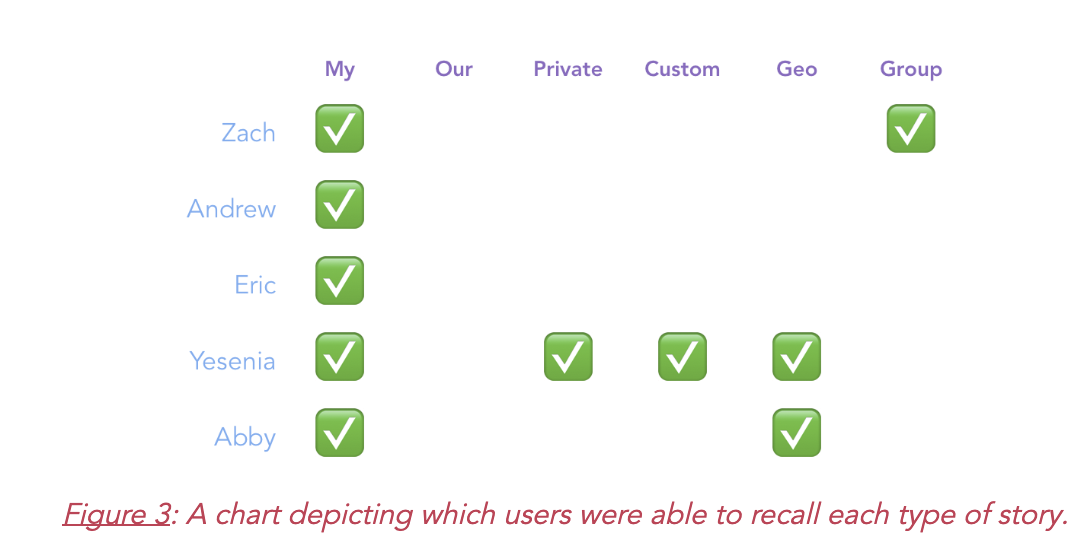
Before we made a decision to decide what features seemed to be causing issues, we designed an initial user testing to attempt and uncover what peoples initial feelings towards snapchat was and how they interacted with the app. This test was only conducted on 5 users due to time constraints. Specific questions, tasks, and notes can be seen here.
The two recurring themes we found were issues regarding the “stories” function and content that doesn’t feel unique or personalized. This lead to our decision to focus on stories and partly on the current “discover” page which offers access to stories and other user content.
After the initial test we decided to do some supplemental tests on 5 users specifically interacting with the stories and discover page. Those results can be seen here.
Sketches and Wireframes
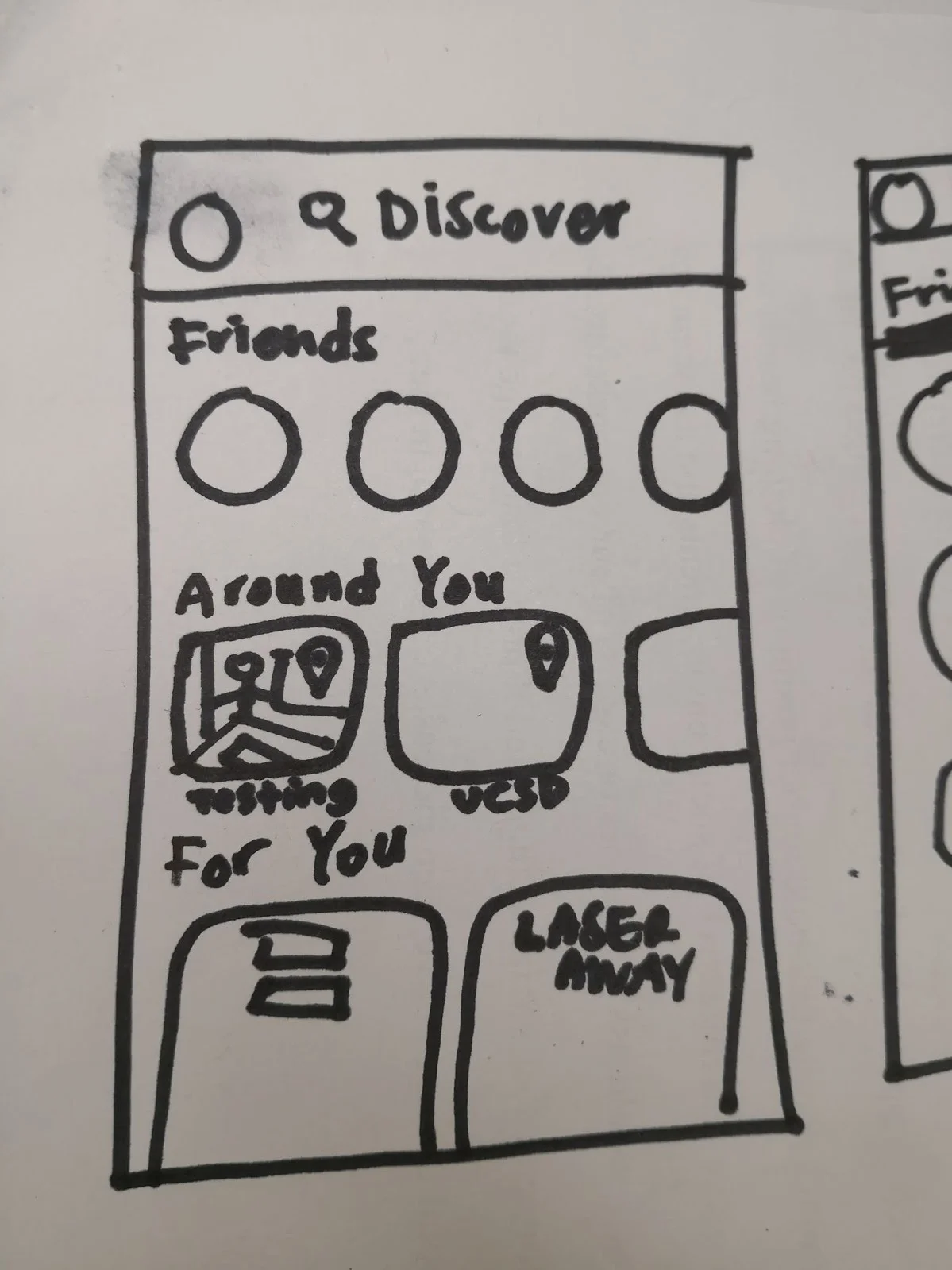
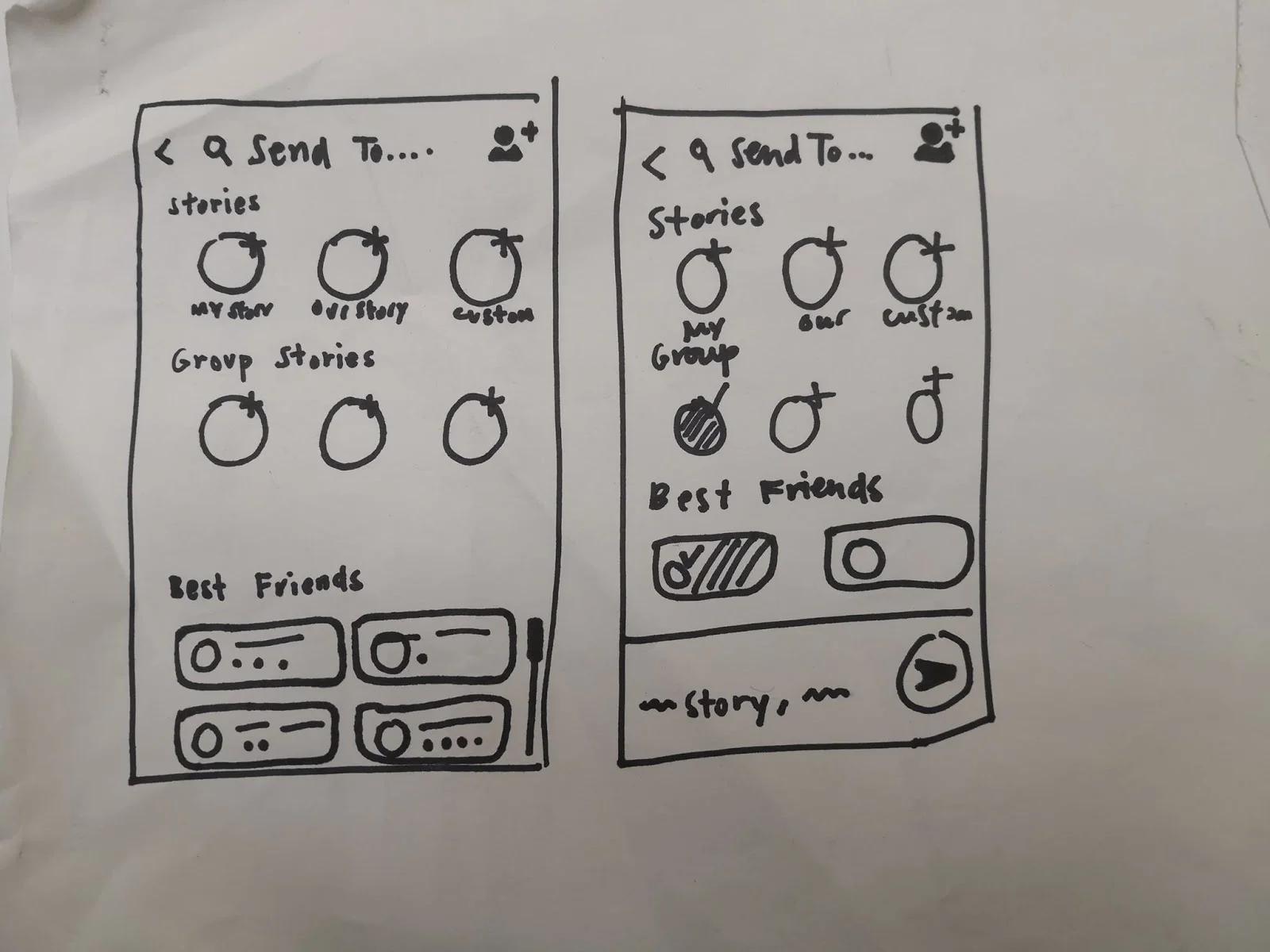
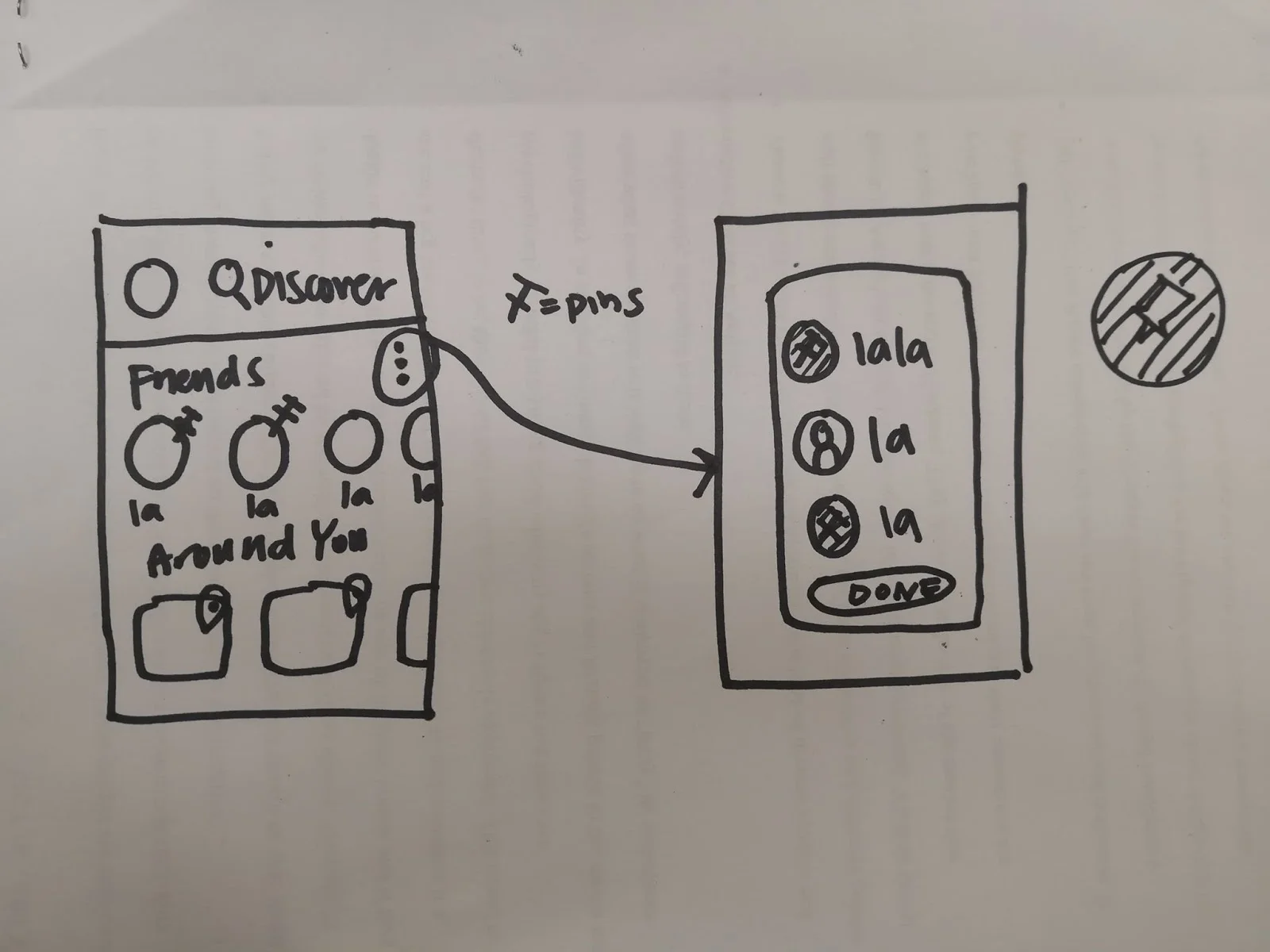
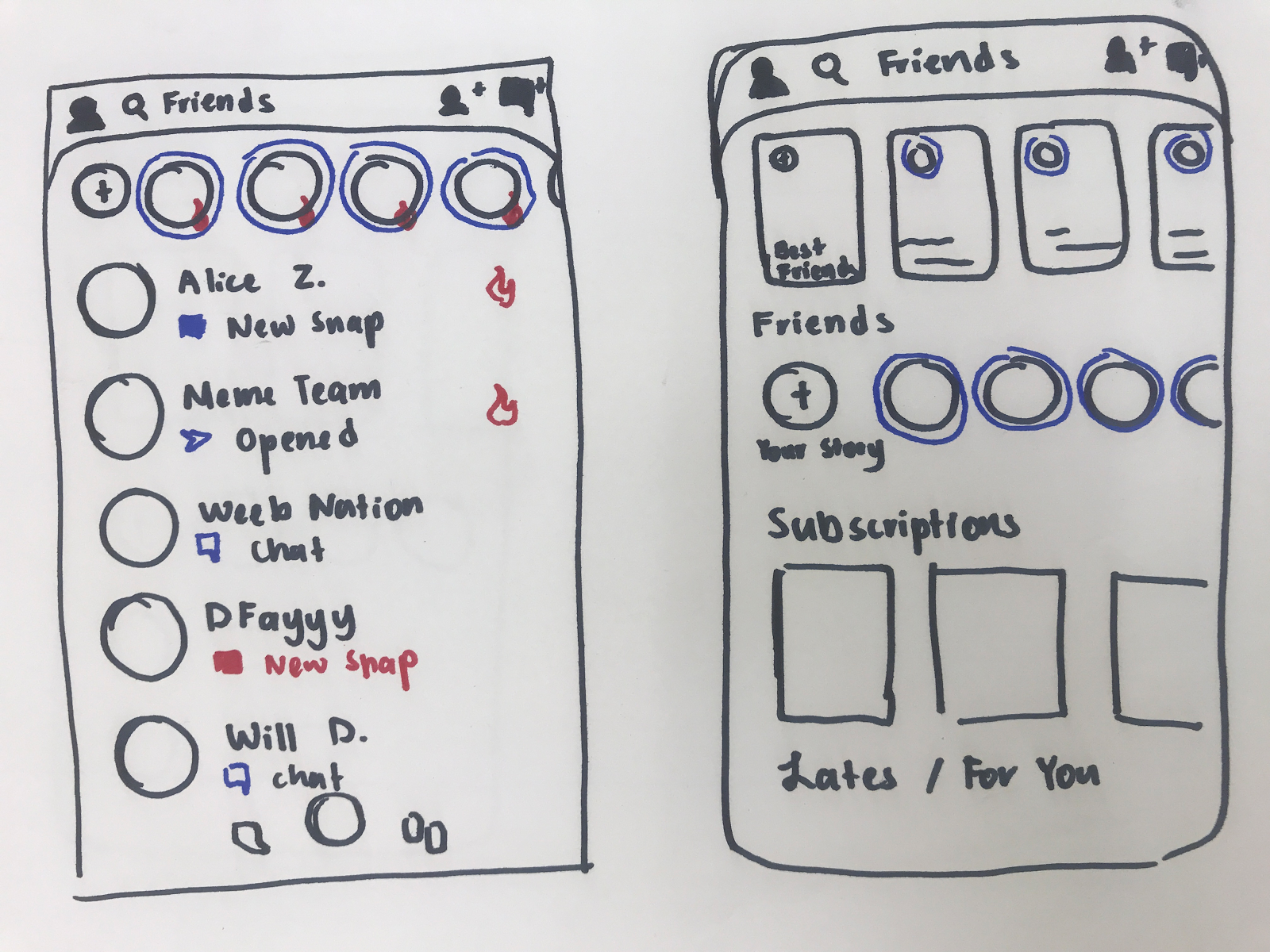
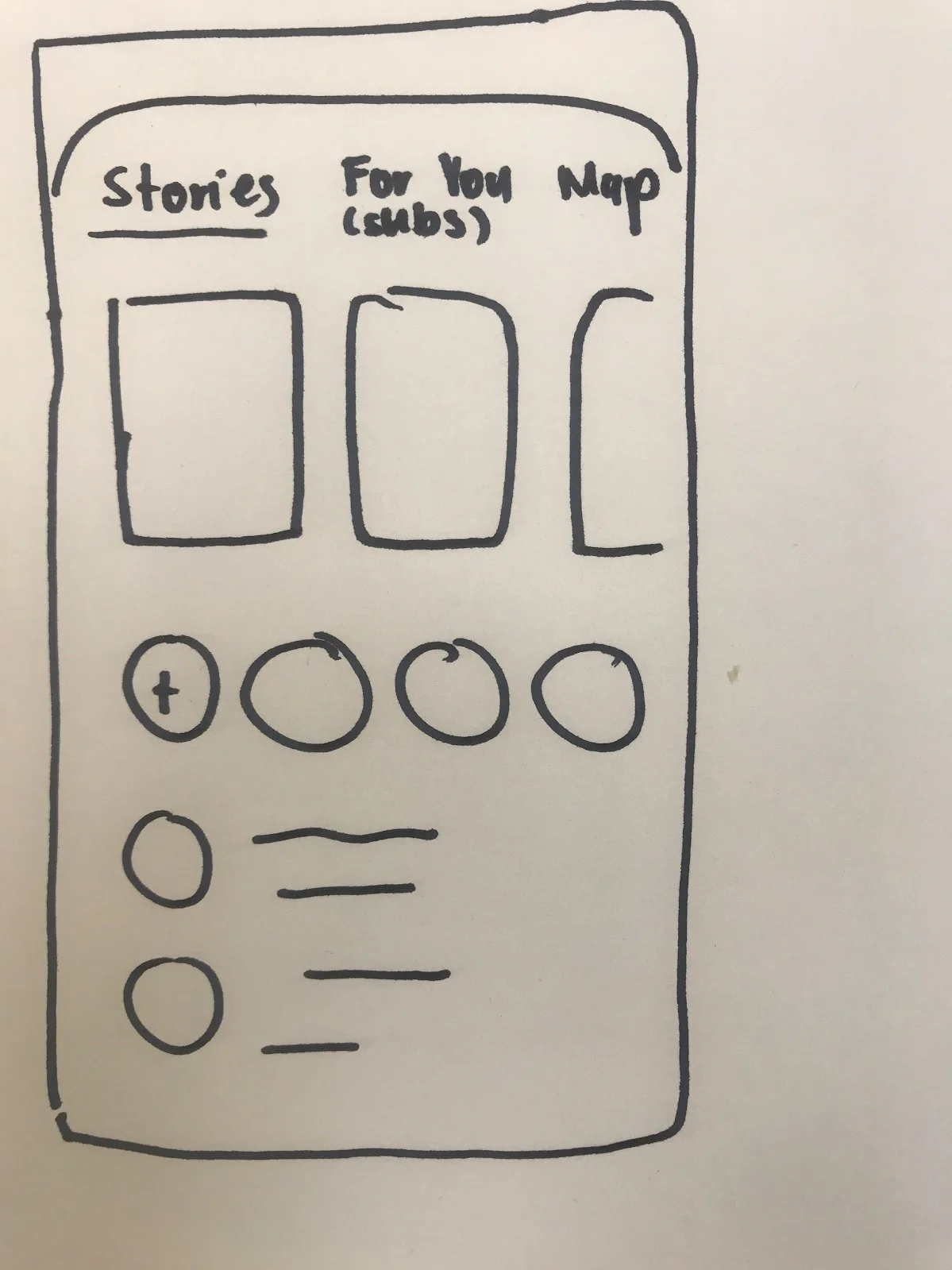
The next step was to sketch out some possible ideas for redesigning the discover page and stories. Each member of the team spent time sketching out a prototype before we discussed each of our ideas and features we thought would make the biggest impact.

Icons for the first prototype.
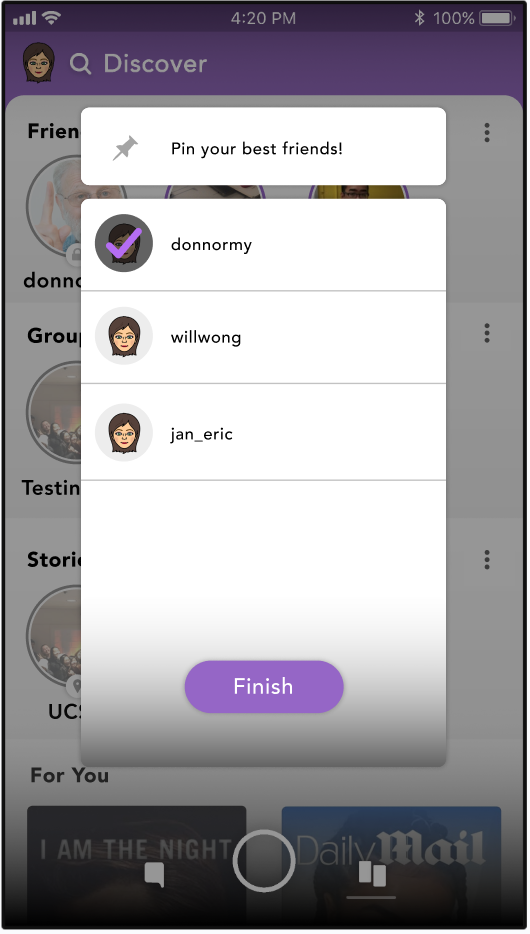
Pin a friend to the front of the friends group
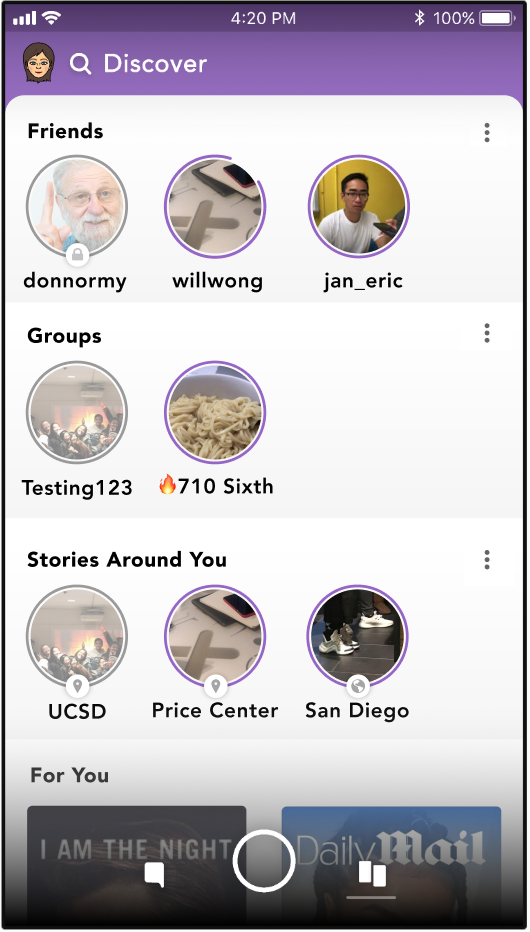
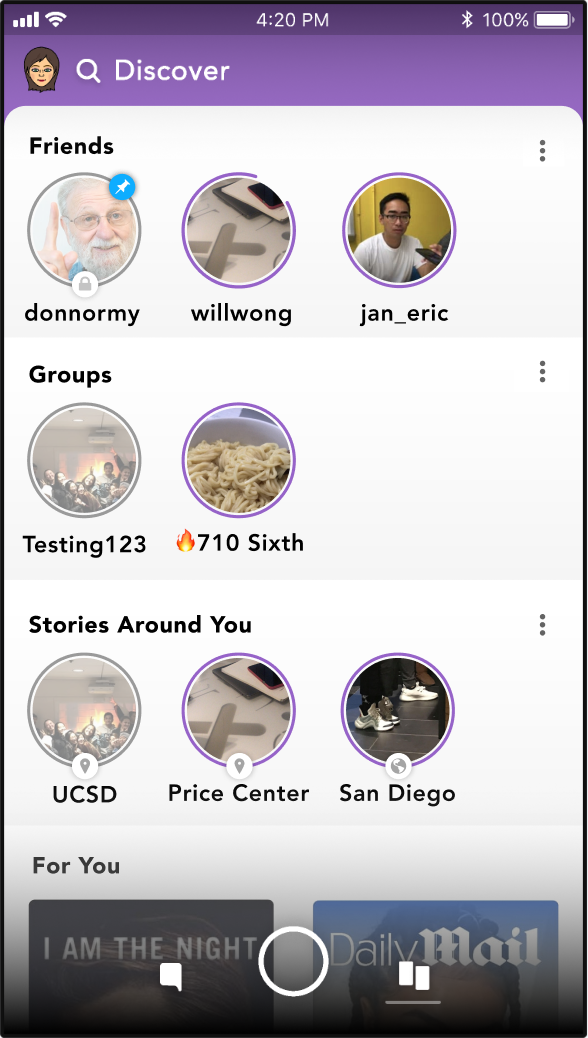
Lock denotes a private group story
Location Pin for a “geo story”
World for “our story”
First Prototype and Rational
This first prototype was created by Lucy Xu.
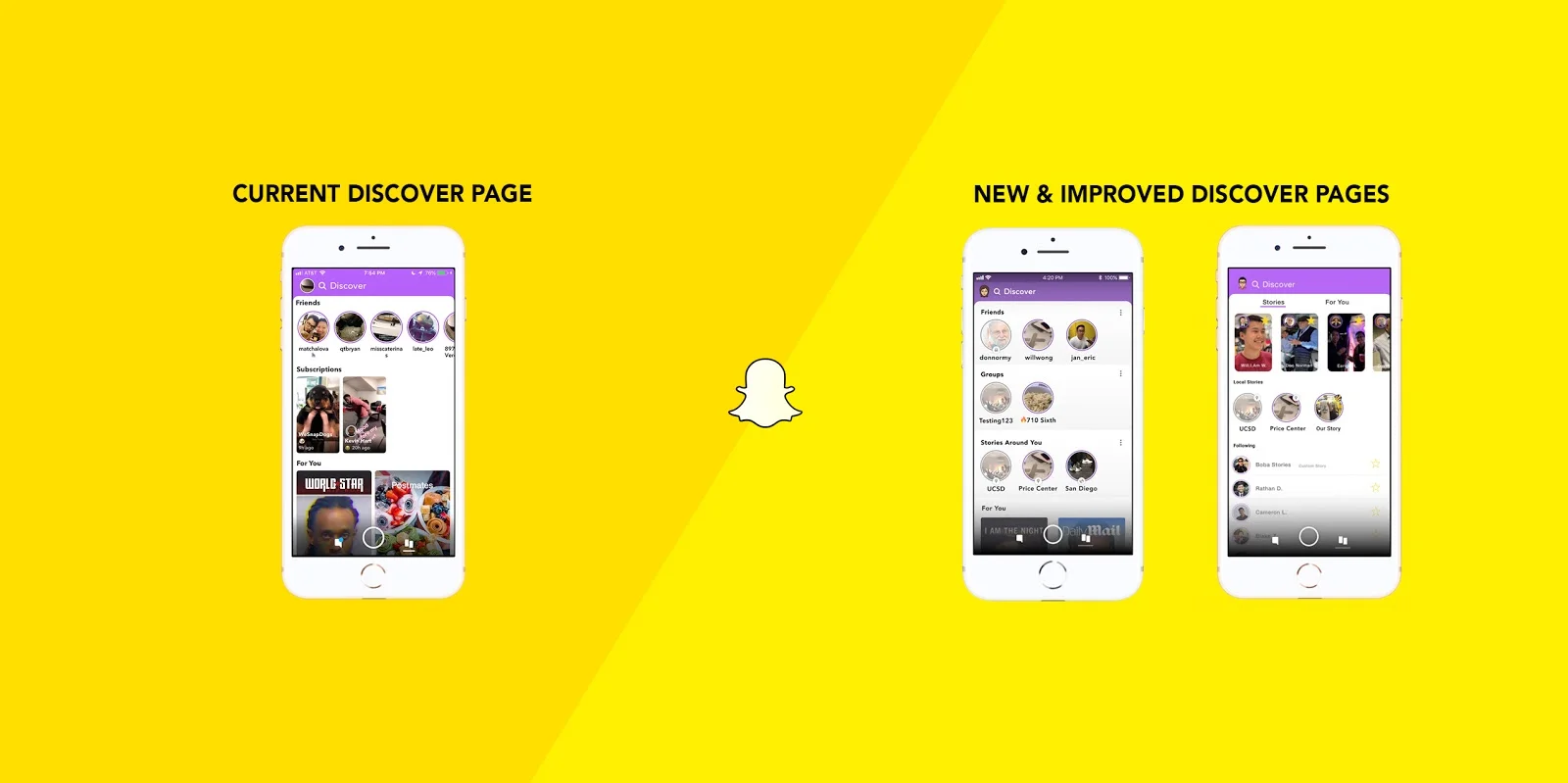
We discussed some important features between the layout of the page and certain icons for feedback. For the layout we wanted to make distinct sections between various snapchat “groups”, which before were causing confusion. In this case we have “friends”, “groups”, and “stories around you”. These groups provide a distinct space for different types of stories which previously were all clumped together with no indicators for what type of story they were.
Second Prototype and Rational
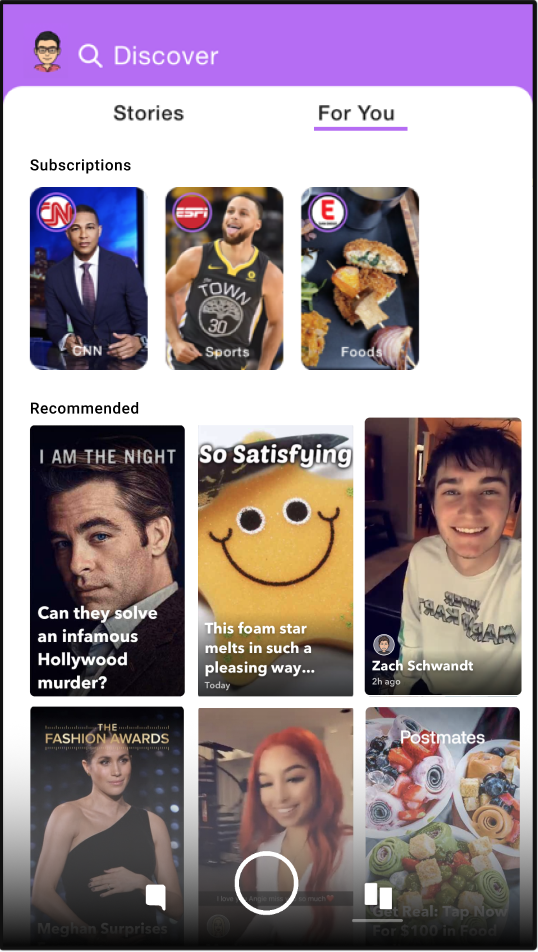
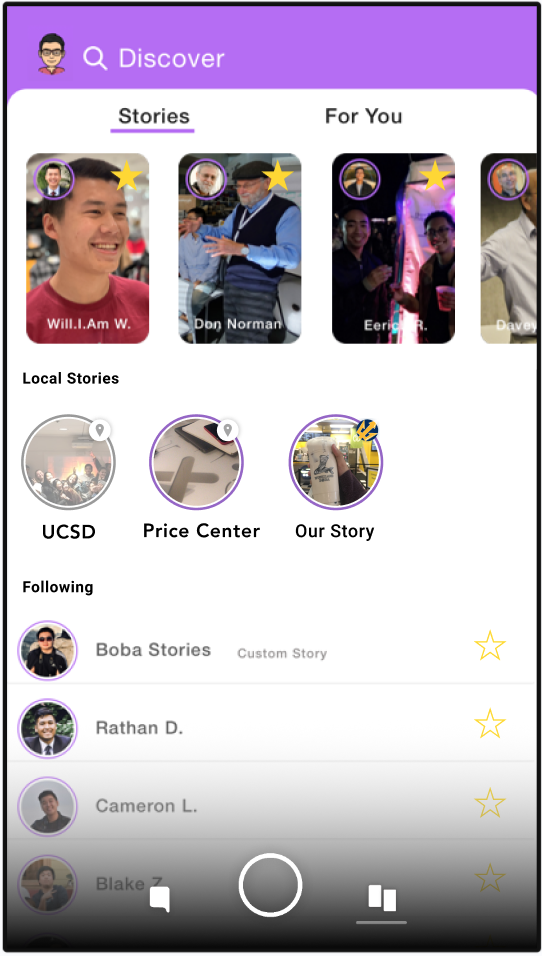
This second prototype was worked on by myself and the remaining three members of the team. We decided to split this “discover page” into two sections because we found not many people utilized the “for you” part of the current page.
We created a star icon to denote friends or celebrities a user favorite to have them pinned to the top of the “stories section”. This decision was made to allow for user control and allow them to create a page they control.
We then have a section for “local stories” which includes similar icons to denote what type of story they are (geo story, our story, etc.). This decision was made so users have some signifiers of what stories they are viewing when they decide if they wish to click on them
Lastly, there is a section for the rest of your friends, or who you are following with subtext to inform the user of that story type.
The “for you” page takes the current discover page company and media content and places it in its own section. This will allow users to view it when they want and not feel it invades their personal social content.